Learn
How to identify poison ivy
“Leaves of three, let it be” is a decent start and a poor finish. Plenty of harmless plants have three leaflets, and poison ivy changes its appearance dramatically across the year. Four features settle it.
What does poison ivy look like?
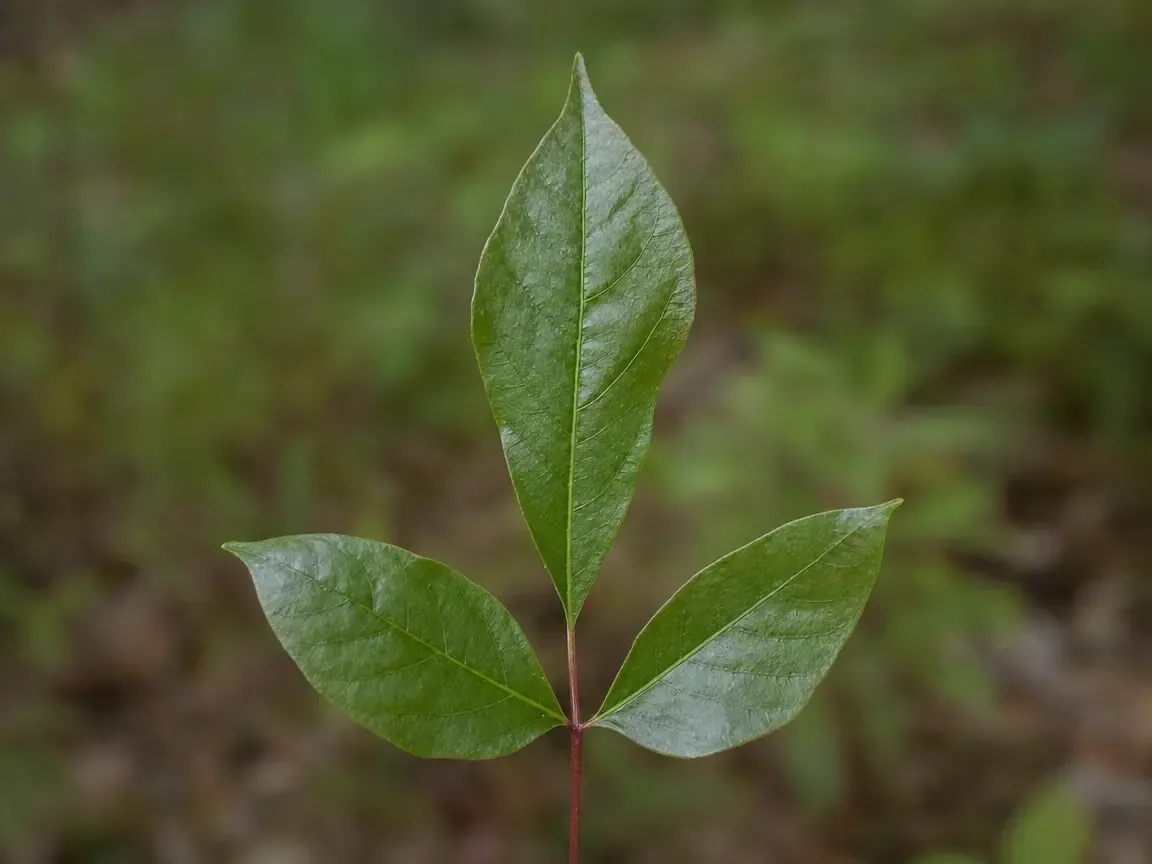
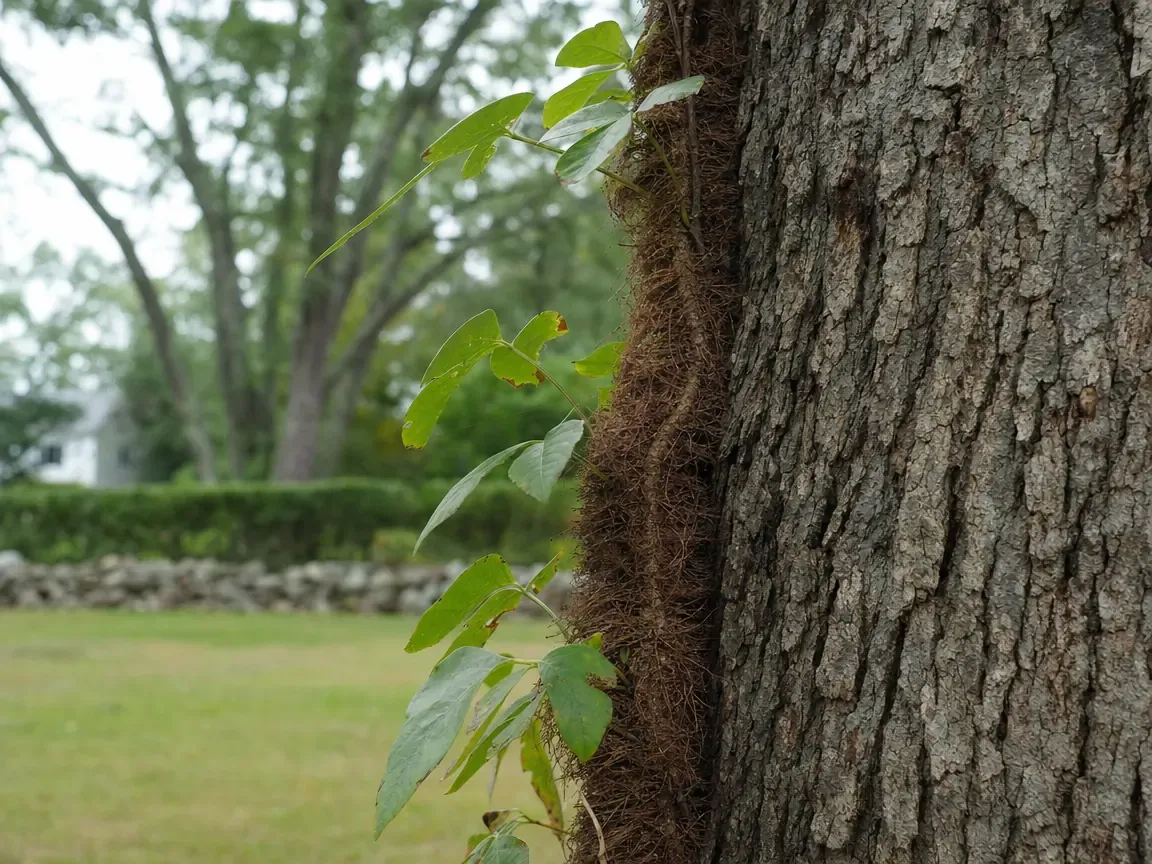
Poison ivy (Toxicodendron radicans) has three leaflets on every stalk, with the centre leaflet on a noticeably longer stem than the two beside it. The leaflets are 2 to 6 inches long, smooth-surfaced and slightly waxy, with edges that are smooth or gently waved but never saw-toothed. There are no thorns anywhere on the plant. A mature climbing vine is covered in fine aerial rootlets that make it look wrapped in rusty steel wool.
Take those four together and you have a reliable identification. Take any one of them alone and you do not — which is how people end up clearing Virginia creeper and leaving the real thing standing.
The four features, in order of usefulness
1. Three leaflets, middle one on a longer stalk. This is the first check and it eliminates most of the field. Five leaflets is Virginia creeper. Seven to thirteen leaflets on a shrub in wet ground is likely poison sumac, which is a different plant and a worse one.
2. Smooth or gently waved edges. Poison ivy leaflets are not serrated. Brambles, raspberry canes, and boxelder seedlings all have distinctly toothed edges, and boxelder in particular fools people because it also has three leaflets when young.
3. No thorns, anywhere. Not on the stem, not on the leaf. If what you are looking at has thorns or prickles, it is a bramble or a rose, not poison ivy. This is the fastest single check in the list.
4. Hairy vine on a mature climber.Once it is climbing, the vine develops dense aerial rootlets and takes on a furred, reddish-brown appearance. On an old vine the stem can be as thick as an adult's wrist. Nothing else in this region looks quite like it.
Where does it grow?
Almost anywhere. It tolerates full sun and deep forest shade, wet swamp ground and dry salt-laden dune, and it grows from Newfoundland to northern Florida. In practice it concentrates where nobody manages the ground and where there is structure to climb: fence lines, stone walls, tree bases, woodland edges, path margins, rail cuts, and towpaths.
It also takes three completely different forms — a low groundcover, a free-standing shrub, and a heavy climbing vine — all from the same species. People who know it as one form frequently fail to recognise it in another.
The four checks. Any one on its own is not enough; together they are reliable.
Through the year
It does not look the same in February as it does in July
This is the single biggest reason people get caught out. The plant most of us learned to recognise is high-summer poison ivy, and three quarters of the year it looks like something else entirely.
Spring
New leaves emerge glossy and often reddish or bronze before turning green, which is when people most often mistake them for something ornamental. Small yellow-green flower clusters appear in May and June.
Summer
Full green, 2 to 6 inches per leaflet, slightly waxy. This is the form everyone pictures — and the form that is hardest to pick out of a mixed hedgerow because everything around it is green too.
Autumn
It turns brilliant — orange, scarlet, pink, deep yellow — and it is genuinely beautiful, which is exactly how it ends up in armfuls of foliage brought indoors. Small waxy white-green berries form along the stems.
Winter
Leafless, and just as toxic. What is left is a bare stem or a hairy grey-brown vine on a trunk, plus clusters of pale berries that persist into early winter. This is when most bad exposures happen.
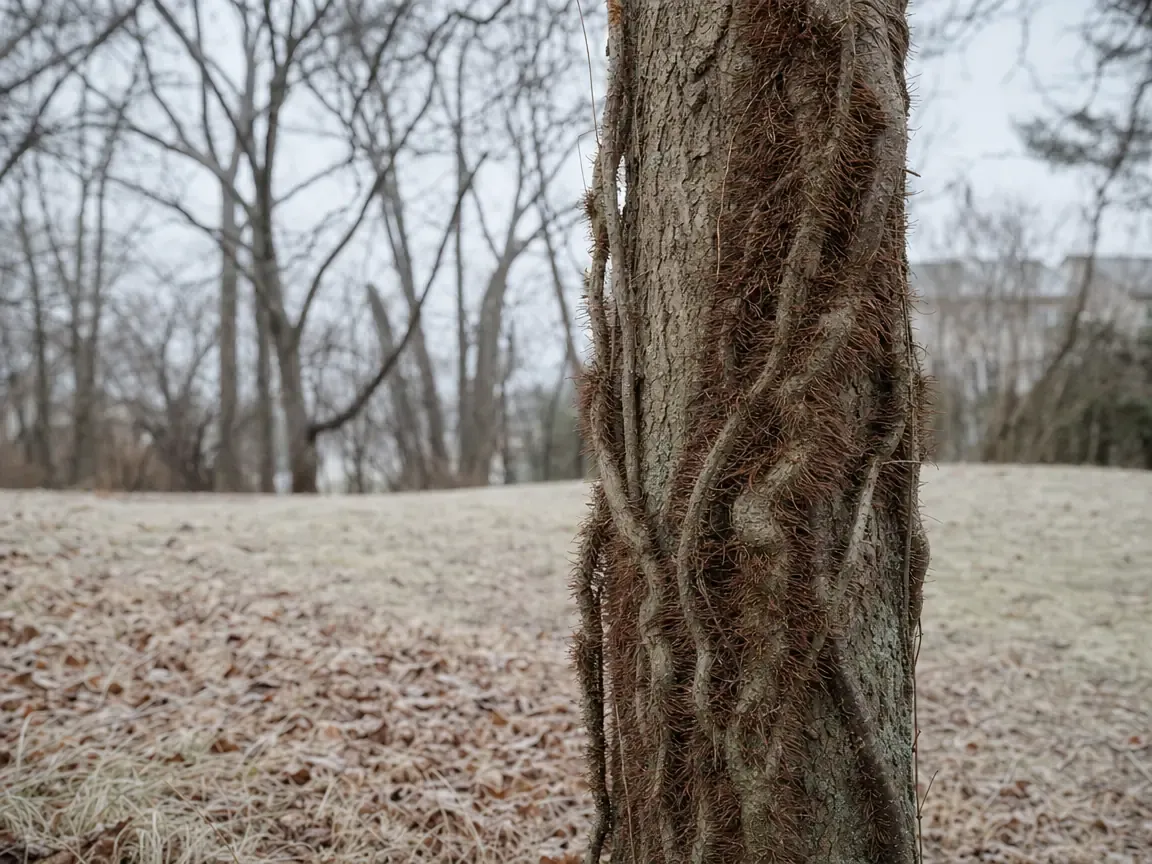
Urushiol is present in the bare stems, the vine, and the roots year-round. A leafless grey vine on a tree trunk in January is exactly as capable of causing a reaction as a leafy plant in July — and it is far less likely to be recognised. Firewood gathering, winter brush clearing, and fence repair are where a large share of serious exposures actually happen.
Next
Still not certain?
Then do not touch it, and do not cut it to get a better look. Compare it against the six plants most often mistaken for poison ivy, or check whether what you have is actually poison oak or poison sumac. If you would rather just ask, send us a photo — identification costs nothing.
Get your property back
Tell us where it is and how bad it's got, or just call. We'll tell you straight what the job involves and what it costs. No pressure, no chemicals, no guessing.