Learn
Plants mistaken for poison ivy
Two mistakes are possible here and only one of them is harmless. Clearing a plant that was never dangerous wastes an afternoon. Deciding the real thing is 'probably just creeper' costs considerably more.
Count the leaflets first, then look at the edge. Those two checks resolve most cases.
The usual suspects
Six plants, and the one feature that settles each
Virginia creeper
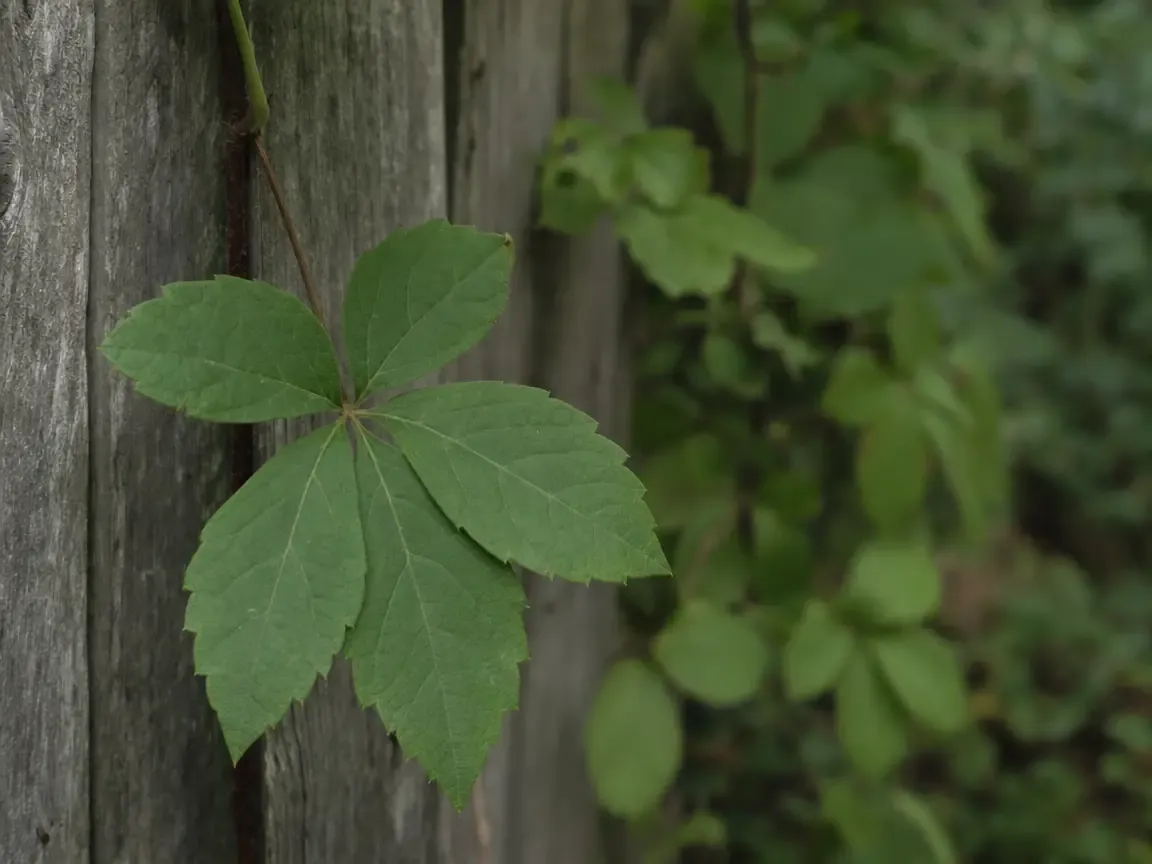
Five leaflets, not threeParthenocissus quinquefolia
By far the most common false alarm, because it climbs the same trees, turns the same brilliant red in autumn, and grows in exactly the same places. Count the leaflets: creeper has five radiating from one point. It is harmless to most people, though the berries are toxic if eaten and a minority react to the sap.
Boxelder seedling
Toothed edges, leaves in opposite pairsAcer negundo
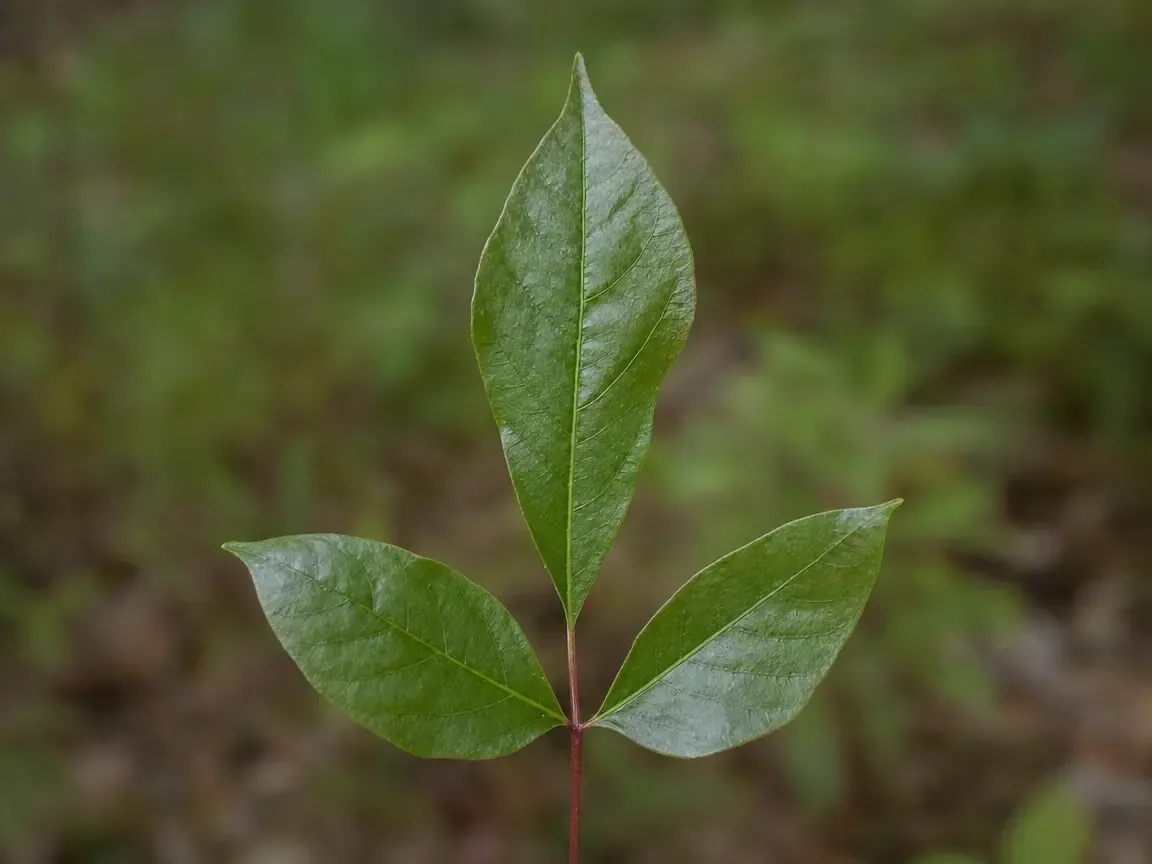
A young boxelder has three leaflets and fools almost everyone. Two things separate it: the leaflet edges are coarsely toothed rather than smooth, and boxelder leaves grow in opposite pairs on the stem while poison ivy leaves alternate. Check where the stalks meet the stem.
Brambles & raspberry canes
ThornsRubus spp.
Young bramble growth can show three leaflets with a rough surface. It also has thorns or prickles on the cane, and poison ivy never does. This is the quickest check on the list — if you can see thorns, you can stop looking.
Fragrant sumac
No stalk on the centre leafletRhus aromatica
A genuinely close match: three leaflets, similar size, similar autumn colour, and it is in the same family. The difference is the centre leaflet, which sits almost directly on the stem rather than on the long stalk poison ivy gives it. Fragrant sumac is harmless.
Jack-in-the-pulpit
Dies back entirely; never climbsArisaema triphyllum
A woodland wildflower with three broad leaflets on a single upright stalk, common in damp shade. It has no woody stem, never climbs anything, and disappears completely by late summer. It is a native worth leaving alone.
Young ash & hog peanut
Leaflet count and habitFraxinus spp. / Amphicarpaea bracteata
Ash seedlings show opposite, toothed compound leaves with more than three leaflets once established. Hog peanut is a slender trailing vine with three leaflets, but the leaflets are thin, dull, and papery rather than waxy, and the stems are wiry with no aerial rootlets.
What if I still can't tell?
Treat it as poison ivy. The cost of being wrong in that direction is that you leave a harmless plant alone for a few more days; the cost of being wrong in the other direction is up to three weeks of a severe blistering rash. There is no version of this where guessing optimistically is the sensible play.
What you should notdo is cut a piece off to look at it more closely, or crush a leaf to check the texture. Both put urushiol directly on your skin and on whatever you were holding. Photograph it from a comfortable distance instead — a phone camera at arm's length will show the leaflet stalks and the edge detail clearly enough to identify from.
Send us the photo. Identifying it is free, we do not charge for the answer, and we would far rather tell you it is Virginia creeper than meet you after the fact.
If it turns out you do have it, here is what removal involves.
Get your property back
Tell us where it is and how bad it's got, or just call. We'll tell you straight what the job involves and what it costs. No pressure, no chemicals, no guessing.