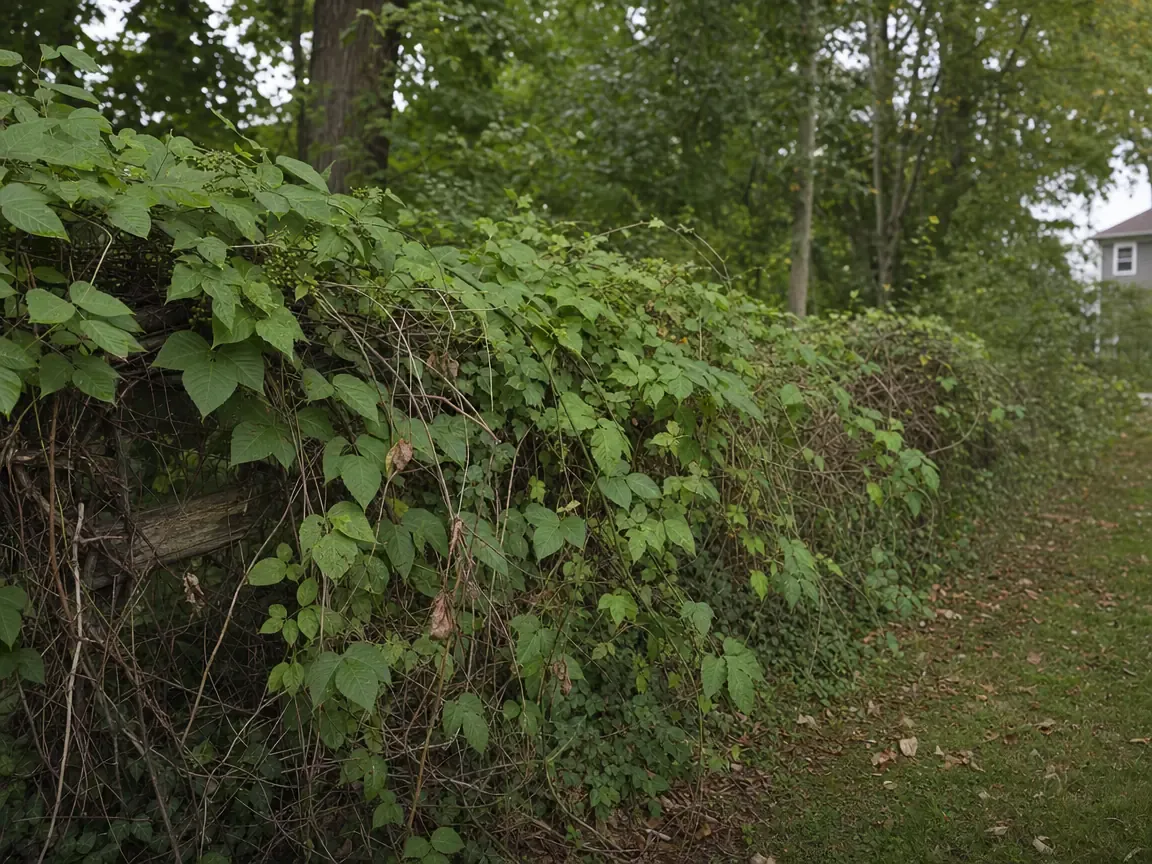
Also removed
Invasive & hazardous plants
Poison ivy almost never grows alone. Some of what it grows with will hurt you as badly or worse; the rest is quietly taking your ground. We remove all of it the same way — physically, without herbicides, in the same visit.
Group one
Plants that injure people
These are not aesthetic problems. Two of the three cause chemical burns rather than rashes, and one of them is a regulated noxious weed that landowners are expected to control.
Giant hogweed
Heracleum mantegazzianum
The most dangerous plant in this region. Its sap causes phytophotodermatitis — the skin burns in sunlight, blisters severely, and can scar for years. Sap in the eye can cause blindness. It is a regulated noxious weed in New York and New Jersey. Do not cut it, do not strim it, do not attempt this one yourself.
Wild parsnip
Pastinaca sativa
Same mechanism as hogweed and far more widespread — tall yellow flower heads along roadsides, field margins, and trail edges. Contact plus sunlight equals a chemical burn, which is why so many people connect the reaction to the sun rather than the plant.
Stinging nettle
Urtica dioica
Rarely serious, consistently miserable, and it colonises damp rich ground fast. On a property where children play or staff work a fence line, a nettle bed is a genuine nuisance worth clearing properly rather than mowing.
Group two
Plants that take your ground
Slower, but the end state is the same: a boundary you cannot walk, trees coming down, and a property that shrinks a little every season.
Japanese knotweed
Rhizomes that travel metres from the visible stand and regenerate from a fragment the size of a fingernail. This is the one where doing it badly makes it worse, and where soil movement off site is a legal and practical minefield.
Kudzu
Fast enough to bury a shed in a season. The crowns are the target — cut vines alone buys you a few weeks.
Phragmites
Common reed. Takes over wetland margins and pond edges, crowds out everything, and blocks the view and the access people bought the property for.
Multiflora rose
The 'wild tea rose'. Dense, thorny, impassable, and almost always tangled through whatever else is on the fence line — usually including the poison ivy.
Oriental bittersweet
A strangling vine. It spirals a tree trunk, thickens, girdles it, and eventually brings the crown down. Removal is about saving the tree.
English ivy
Handsome on a wall, ruinous on a tree. It adds weight and windsail to the canopy and hides decay in the trunk beneath it.
Mile-a-minute weed
Barbed, annual, and named for a reason. It smothers young plantings and regenerates from a large seed bank, so timing the removal matters.
Honeysuckle & wisteria
Ornamentals that escaped. Both form heavy woody tangles that pull down fencing, arbours, and small trees.
Running bamboo
Rhizomes that travel under driveways, patios, and foundations. We remove it the same way, organically — it is the specialty of our sister practice.
Commercial & institutional
When it's ground the public walks on
Schools, camps, playgrounds, parks, golf courses, marinas, and nursing homes all carry a duty of care over ground other people use, and a hazardous plant along a path edge or a fence line shows up in an incident report long before it shows up in a landscaping budget.
We work to your calendar rather than ours — closed season, out of hours, between sessions — and we document what was removed and where, which is usually what a grounds manager or a risk officer actually needs from the visit.
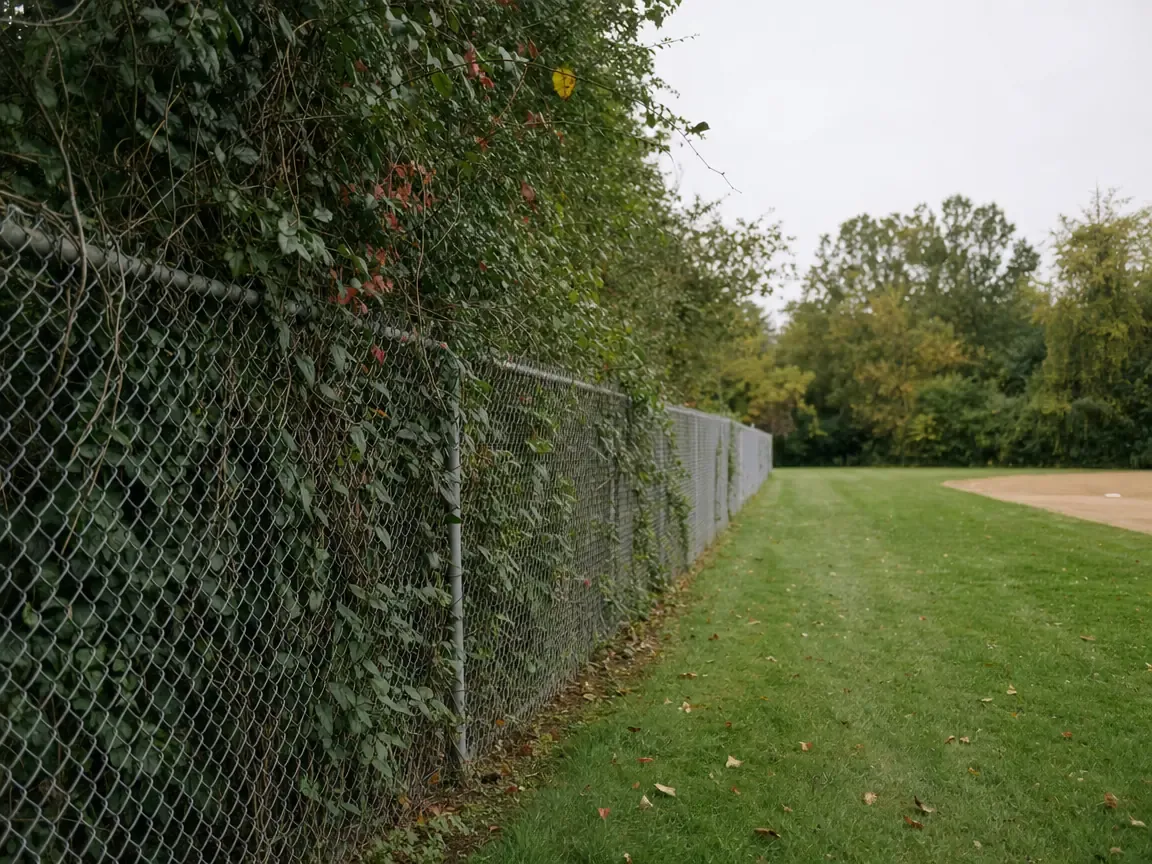
Property types we work on
- Private homes
- Estates & acreage
- Schools
- Summer camps
- Playgrounds
- Public parks
- Golf courses
- Marinas & waterfront
- Nursing homes
- HOAs & associations
- Beach clubs
- Industrial sites
One visit, the whole fence line
If you have poison ivy, you probably have at least one of these tangled through it. Tell us what you can see and we'll identify the rest on site.