Learn
Poison ivy vs. oak vs. sumac
Three different plants, one shared toxin. Knowing which you have does not change how it is removed — it changes where you should be looking for the rest of it, and how cautious to be.
What is the difference between poison ivy, poison oak, and poison sumac?
All three are in the genus Toxicodendron and all three carry urushiol, the compound that causes the rash, so a reaction to one means a reaction to all. What differs is appearance and habitat. Poison ivy has three leaflets and grows almost anywhere. Poison oak has three lobed, oak-like leaflets and prefers dry open ground; it is uncommon in the Northeast. Poison sumac has seven to thirteen leaflets, grows as a shrub or small tree, and is found only in wet ground — and it is generally considered the most potent of the three.
Side by side
Five ways to tell them apart
| Poison ivy | Poison oak | Poison sumac | |
|---|---|---|---|
| Leaflets | Always three. Centre leaflet on a longer stalk. | Three, lobed like a small oak leaf, often fuzzy underneath. | Seven to thirteen, in pairs along a red stem with one at the tip. |
| Form | Groundcover, low shrub, or a heavy climbing vine — all the same plant. | Low shrub, occasionally a short climber. Rarely a large vine here. | Shrub or small tree, 6 to 20 feet. Never a groundcover. |
| Where it grows | Almost anywhere — sun, shade, swamp, dune, fence line, tree base. | Dry sandy or rocky ground, open woods and scrub. Uncommon in this region. | Wet ground only — bogs, swamp margins, wet woodland, pond edges. |
| Berries | Small waxy white-green clusters along the stem. | Similar white-green clusters, often fuzzy. | Loose drooping clusters of cream-white berries. |
| Autumn colour | Brilliant scarlet, orange, and yellow. | Red to orange-bronze. | Intense red-orange, often the brightest thing in the swamp. |
The one people miss
Poison sumac doesn't look dangerous
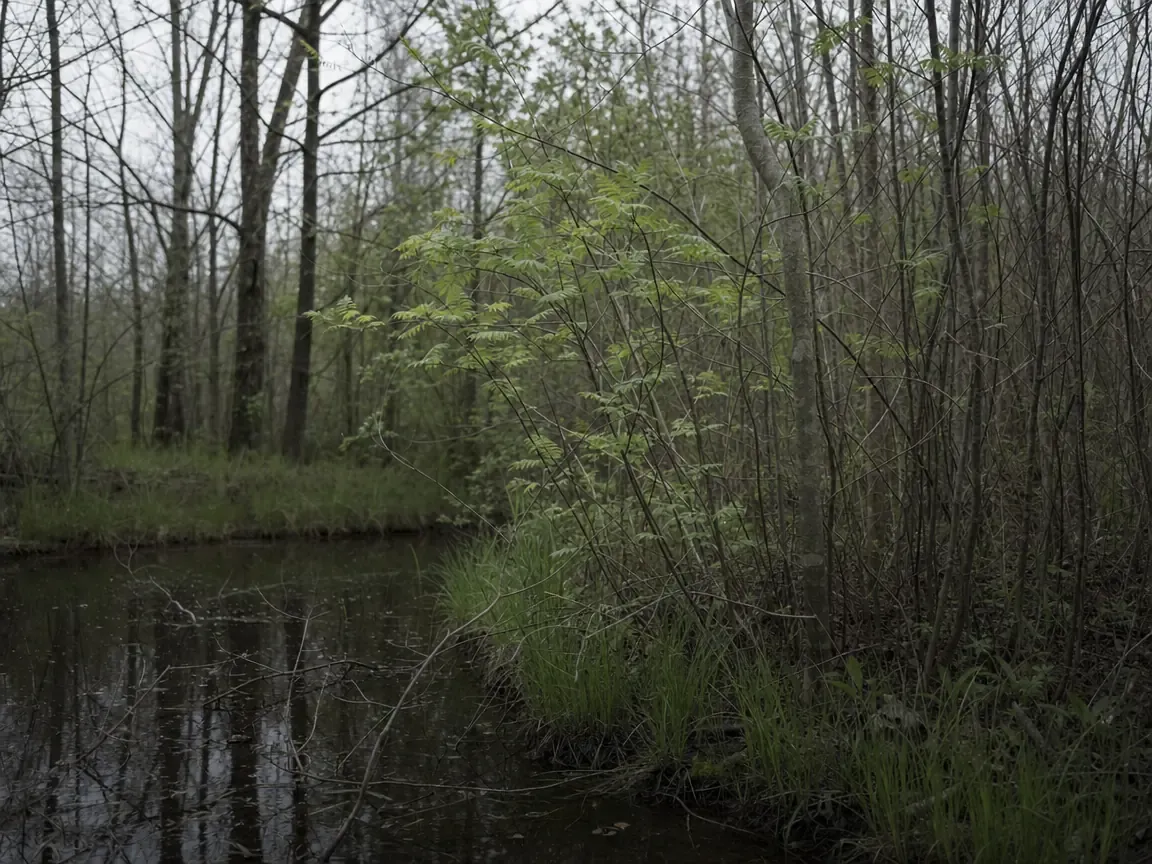
Poison ivy at least has a reputation. Poison sumac looks like an ordinary understory shrub — no three leaflets to trigger the rhyme, no climbing vine, just a pleasant-looking small tree with pinnate leaves and red stems, standing in wet ground.
It is also the most potent of the three. Because it grows in bogs, swamp margins, and wet woodland, the people who meet it are usually doing something specific: clearing a pond edge, walking a wetland boundary, working a drainage line.
The reliable tell is the leaf structure and the ground. Seven to thirteen leaflets arranged in pairs along a reddish stem, on a shrub standing in wet soil, is poison sumac. Harmless staghorn sumac — the familiar roadside plant with the fuzzy red seed cone — has toothed leaflets and grows in dry ground. If the stems are fuzzy and the seed heads are upright and crimson, it is not the one that hurts you.
Removal
Does the removal method change?
No. All three come out physically — the plant, the crown, and the root run — with the material bagged and hauled off the property. No herbicide is used on any of them.
What changes is the ground you are working on. Sumac sits in wetland, which means access matters, footing is poor, and anything you might have been tempted to spray would be going straight into water. It is one more reason the method has never involved chemicals.
Get your property back
Tell us where it is and how bad it's got, or just call. We'll tell you straight what the job involves and what it costs. No pressure, no chemicals, no guessing.