Core service
Poison ivy, oak & sumac removal
All three plants carry the same toxin and all three come out the same way: physically, at the root, with everything hauled off your property. No spray, no waiting period, nothing toxic left standing.
The problem with the alternatives
A dead vine is still a toxic vine
Poison ivy regrows from its root system and from creeping stems that root wherever they touch ground. Cutting the vine at the base removes the part you can see and leaves the part that matters, which is why it comes back the following season looking exactly as it did.
Herbicide is the more common answer and the more misleading one. It does kill the plant, eventually and often after repeat applications. But urushiol, the compound that causes the rash, is not destroyed when the plant dies. You are left with a dead, brittle, still-toxic vine standing on your property, shedding fragments every time the wind moves it, plus residue in soil your family and pets use.
Physical removal is the only version of this that ends with nothing on your property to touch.
On the day
What a removal actually involves
Less disruption than people expect, and more care than a clearing crew would take. Poison ivy roots shallow, so this is rarely the heavy excavation a knotweed or bamboo job demands — but it is meticulous, because missing a length of root run means doing it again.
What's included
- On-site identification — ivy, oak, sumac, or a harmless look-alike, confirmed before anything is cut
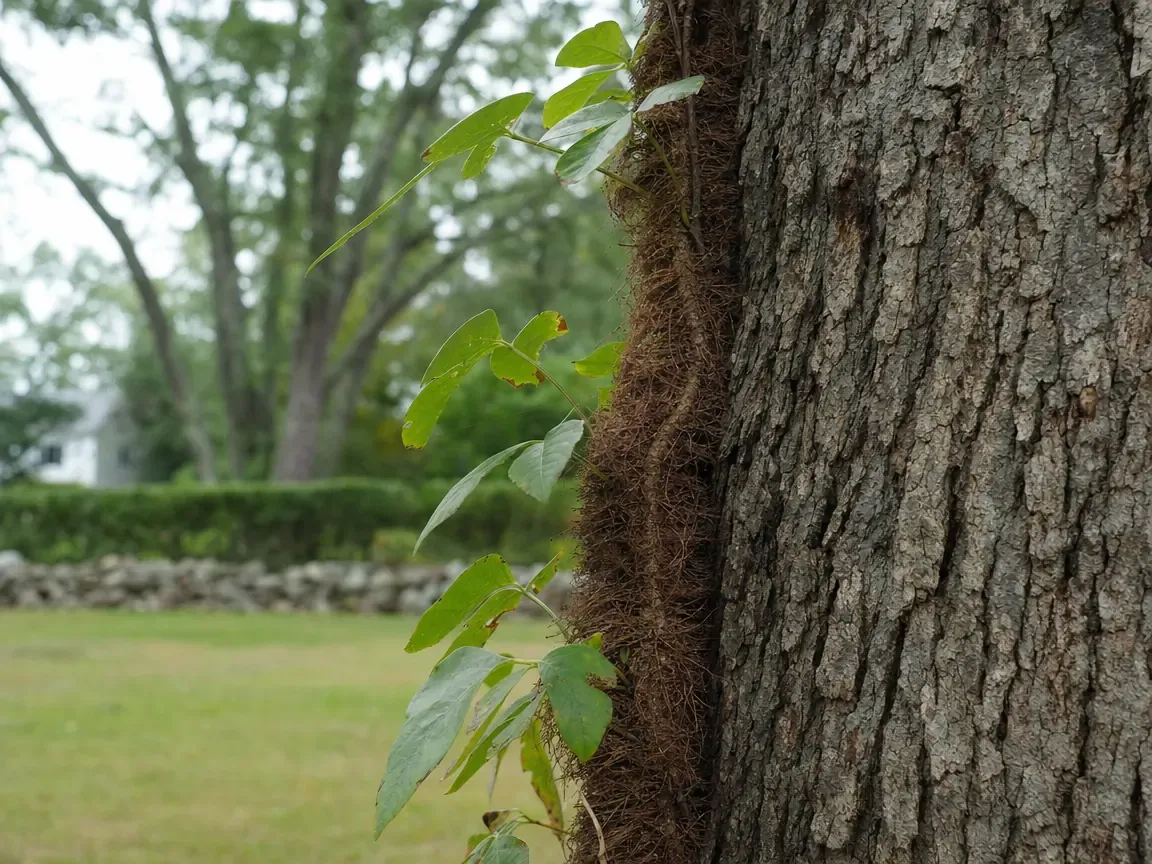
- Mature climbing vines taken off tree trunks without stripping the bark
- The crown and root run excavated, not just the visible growth
- Fence lines, wall faces, and bed edges worked by hand where machinery would do damage
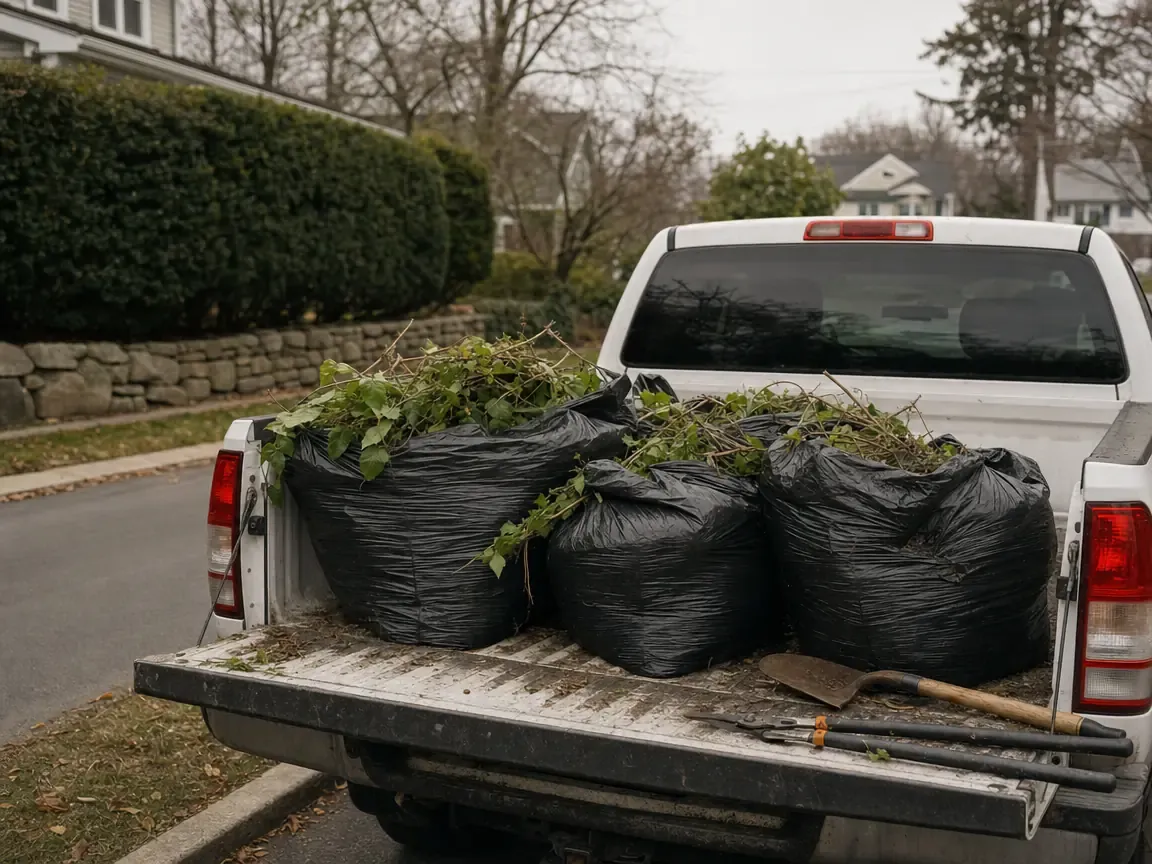
- Every piece of plant material bagged and hauled off your property
- A walk of the finished boundary with you, and the line to watch pointed out
What's not
- Herbicide application of any kind — we do not offer it and will not subcontract it
- Burning, chipping, or on-site composting of the material (all three are unsafe with this plant)
- Replanting, reseeding, or landscape restoration — a separate job we can refer
- Removal on land you do not own or control without the owner's written permission
Poison ivy is never burned, chipped, or composted — not on your property and not on ours. Burning vaporises urushiol into the smoke, and inhaling it causes a reaction in the airway that is a genuine medical emergency. Everything leaves in bags.
All three, same method
Ivy, oak, and sumac
Three different plants, one shared compound. Telling them apart matters for finding them; it changes nothing about how they come out.
Poison ivy
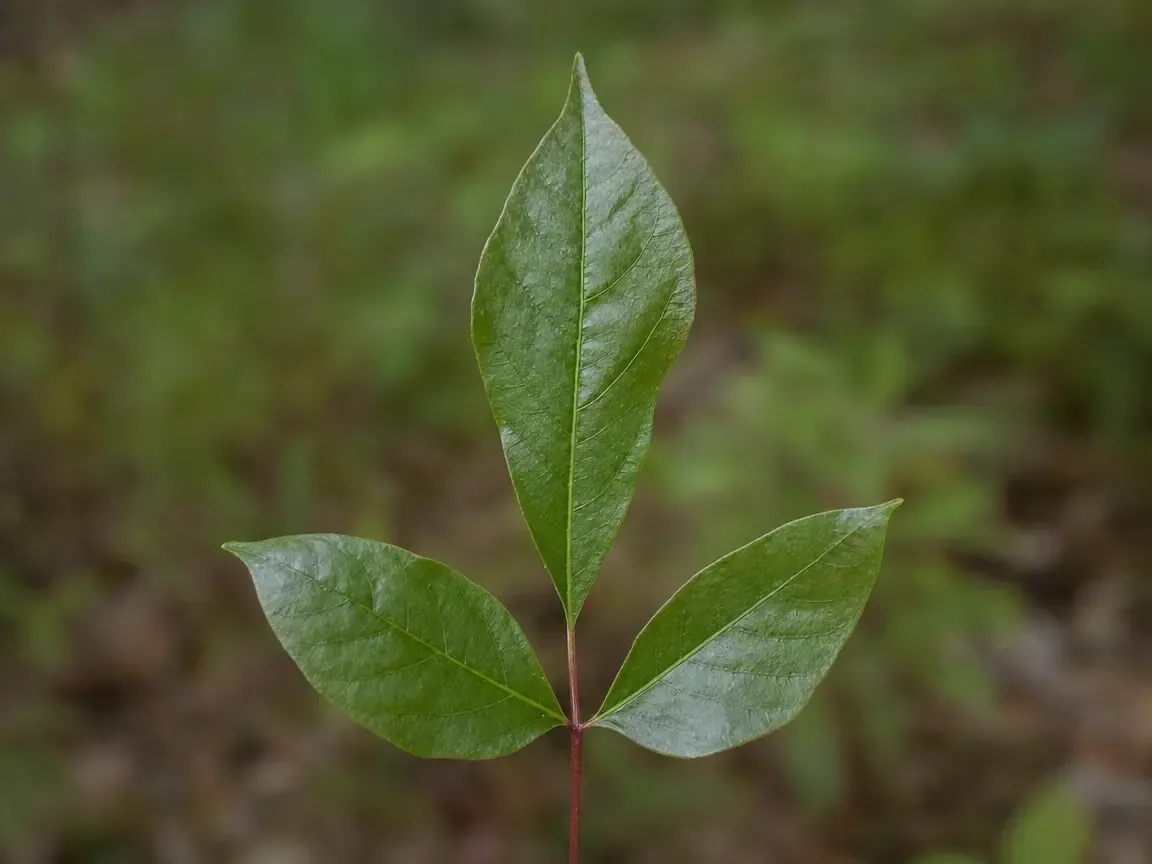
Toxicodendron radicans
The common one, and the most adaptable — full sun to deep shade, swamp to salt-sprayed dune. Groundcover, low shrub, or a wrist-thick vine 40 feet up a tree, all from the same plant.
Poison oak
Toxicodendron pubescens
Less common here than out west but present, usually as a low shrub on dry sandy ground. Leaflets are lobed like a small oak leaf, which is where the name comes from — it is not an oak.
Poison sumac
Toxicodendron vernix
The one people miss. It grows as a shrub or small tree in bogs, swamp margins, and wet woodland, has seven to thirteen leaflets rather than three, and is generally considered the most potent of the three.
Our commitment
The scope, the price, and the guarantee — in writing
You get a written estimate after we have looked at the actual ground, and the number on it is the number you pay, hauling included. All work is guaranteed in writing. What we will not do is promise that a neighbour's untreated vine will stop sending birds over your fence with berries — so we tell you where the pressure is coming from and what to watch for, rather than pretending the boundary is sealed.
Tell us what you're dealing with
Send a photo and a rough area, or call. If you're not sure it's poison ivy, ask before you touch it — that's a free question.